Today we are trying to convert wood waste into biochar.
What we do?
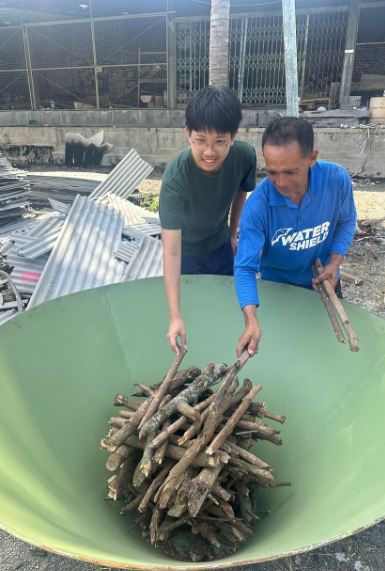
• We stacked all the wood inside the Kon-Tiki kiln
• We used the matches to let it burn carefully with just enough oxygen until the top layer looks like ash
• And then, we added layer until finish production.
• As this is smokeless burning, less carbon dioxide produced
• This process is repeated for 4+ hours and we do water quenching
• After finish, we applied the biochar to the soil
• We repeat the same process for the palm frond
The highlight wasn’t about the science, but about working with local farmers, learning from them, and seeing how small changes can create real impact. By converting agricultural waste into biochar, we aim to improve soil health without increasing input costs, a win for both farming productivity and carbon dioxide reduction.
Climate action doesn’t always start in a lab. Sometimes, it starts with willingness to try, one step ahead and keep on moving.
Scaling sustainable agriculture starts here.
https://www.instagram.com/p/DQl8s2pkmFZ/?igsh=MXhqdmd6ZmN6NXljYg==

Leave a Reply